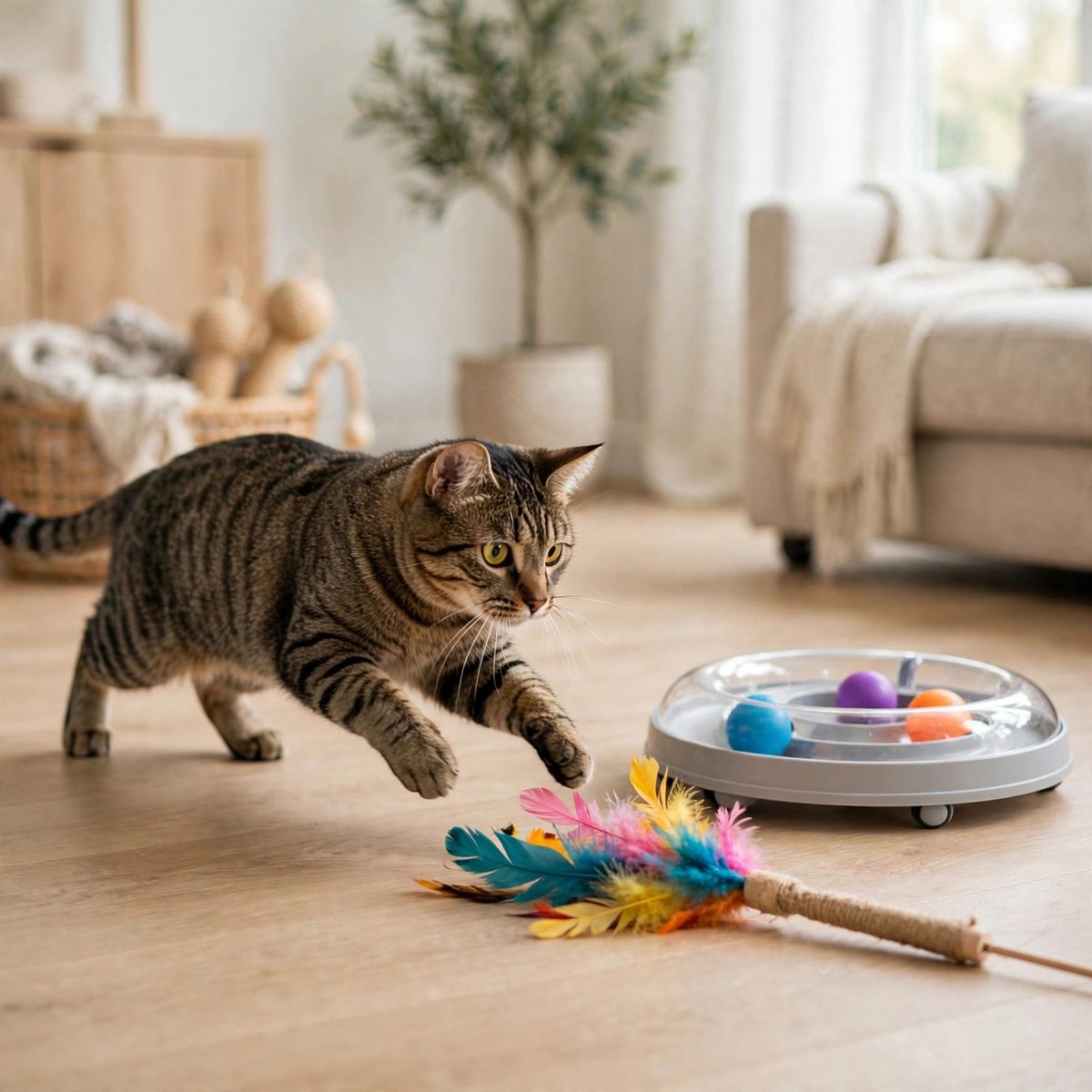
Cats are often described as low-maintenance, but indoor cats still need daily play and mental work to stay active and settled. Without it, many cats sleep through the day, grow restless at night, or develop habits such as scratching furniture or demanding food at odd hours. This article explains how to use wand toys, tracks, kicker toys, and puzzle feeders to build a play routine that fits a cat's natural rhythm of stalk, chase, pounce, and rest.
How Cats Play
Cat play follows a hunting sequence: watch, stalk, chase, catch, and rest. A good play session mirrors that sequence, with slow stalking, a burst of chasing, a satisfying catch, and then a calm wind-down. Sessions work well when they are short, often five to ten minutes, and offered once or twice a day. A cat that gets regular play often shows steadier energy, calmer evenings, and more interest in the household.
Watch your cat's body language during play. Forward ears, a low crouch, and a swishing tail often mean your cat is engaged. Flattened ears, a flicking tail, dilated pupils, or a sudden loss of interest mean the session should end. Respecting those signals builds trust and keeps play feeling safe. End every session with a catch, a treat, or a meal, so your cat finishes with a reward rather than frustration.
Wand Toys: Interactive Play That Holds Attention
A wand toy is the most flexible tool for cat play because you control the speed, direction, and pauses. Move the lure in short dashes, pauses, and changes of direction, and let your cat stalk before the chase. Drag the lure along the floor, flick it behind a chair leg, or lift it slightly so your cat follows with eyes and body. Avoid dangling the lure directly over your cat's head for long stretches, since that can lead to jumping that strains joints.
The WiggleWhisk Feather Wand Cat Toy uses a slim handle, a string, and a cluster of feathers that flutter when you flick the wand. That fluttering motion holds a cat's attention and invites stalking. Keep wand sessions to five or ten minutes, vary the path, and end with a catch. Store wand toys out of reach between sessions so string and feathers are not chewed unsupervised.
Rotate wand lures so play stays fresh. One day, use feathers. Another day, use a fabric strip or a small crinkle lure. That variety keeps the chase interesting without buying a new toy each week. Check strings for fraying before each session, and retire any wand with a worn string or loose lure.
Ball Tracks and Solo Play
Ball tracks give cats something to bat and chase when you are not holding a wand. A ball inside a track rolls in a circle, which keeps it visible and reachable without rolling under furniture. The BouncePup Rolling Cat Ball Track uses stacked rings and colorful balls inside a clear dome, which suits cats that enjoy nosing at moving objects. Place the track on a flat surface where your cat can circle it without knocking it over.
Solo toys work well in rotation. Put a track out for a few days, then swap it for a crinkle toy or a small ball, then bring the track back. That rotation keeps each toy feeling fresh and helps you notice which toys your cat returns to first. Check tracks for loose balls or cracked rings during rotation, and retire any piece that no longer sits firmly in place.
Solo play also includes vertical space. A cat tree, a shelf, or a window perch gives a cat a place to watch, rest, and survey the room. Pair a track on the floor with a perch nearby so your cat can move between ground play and high resting spots. That mix of levels suits cats that like to climb as well as chase.
Kicker Toys and Wrestling Play
Some cats enjoy wrestling after a chase: grabbing a toy, hugging it, and kicking with back feet. Kicker toys are built for that style, with a long body a cat can hold and kick. Offer a kicker toy after a wand session, when your cat is already in play mode. Place it on the floor near your cat and let your cat grab it rather than pushing it toward your cat's face.
Catnip kicker toys add scent interest for cats that respond to catnip. Not every cat responds, and kittens often show little interest, so try one kicker and watch the response before buying more. If your cat ignores the kicker, try a different texture or a toy with a different fill. Some cats prefer a firm kicker they can hold, while others prefer a softer shape they can drag around.
Puzzle Feeders: Meals as Enrichment
Puzzle feeders turn part of a meal into a search game. Raised ridges and small wells slow down fast eaters and give a cat a reason to use feet and nose. The WiggleWhisk Cat Puzzle Feeder Maze uses raised ridges and treat wells arranged in concentric circles, which suits cats learning to work for food. Start with a few visible treats, then add more wells or smaller portions as your cat learns.
Use part of a regular meal in the feeder rather than adding extra food on top, so daily portions stay steady. Place the feeder in a quiet spot where your cat already eats, and keep early sessions short. If your cat feet at the feeder and walks away, try an easier setup with fewer obstacles. If your cat solves the feeder quickly, try a feeder with deeper wells or a different ridge pattern.
Clean puzzle feeders after each use. Shake out crumbs, wash with warm water and mild soap, rinse well, and let the feeder dry fully before the next meal. Food residue left in wells can turn stale and make the next session less appealing. Check ridges and wells during cleaning for cracks or trapped food.
Building a Daily Cat Routine
A practical daily routine has three parts: an interactive wand session, solo play time, and a puzzle feeder meal. Morning could be a wand session followed by breakfast in a puzzle feeder. Midday could be solo play with a track. Evening could be a second wand session before dinner. Adjust the plan to your cat's energy: playful cats may need two wand sessions, while senior cats may prefer one short session and more rest.
Watch for signs that the routine is working: steadier energy, calmer evenings, more interest in toys, and regular rest periods. If your cat still seems restless at night, try moving the main play session closer to bedtime and ending with a meal. If your cat seems tired or uninterested, shorten sessions and offer more rest. Play should leave a cat settled, not wired.
Signs Play Is Meeting Your Cat's Needs
Over two or three weeks, watch for steady changes: a cat that greets you at the door, explores shelves and perches, plays for a full session without quitting early, and then settles for a long rest. Those patterns suggest the mix of wand play, solo toys, and puzzle feeding is landing well. If your cat still paces at night, try a slightly longer evening wand session followed by a meal, and keep the house calm afterward with dim lights and quiet voices. Small adjustments to timing often matter more than adding new toys. Keep notes on which lure, track, and feeder your cat chooses first, and let those preferences shape the next rotation.