Choosing a chew toy is less about finding one toy for every dog and more about matching the toy to how your dog actually chews. A gentle mouth that carries toys around the house needs something very different from a determined chewer that gnaws in one spot for twenty minutes. This guide walks through materials, sizes, and habits so you can pick chew toys that fit your dog, your routine, and your supervision style.
Start With Chew Style, Not Breed Labels
Watch your dog with a toy you already own before you shop. Does your dog lick and mouth the toy, carry it from room to room, or settle down to gnaw? Does your dog bite down hard, try to tear pieces off, or lose interest after a minute? Those observations tell you more than a size chart alone. Gentle chewers often enjoy softer ridged toys and textured shapes they can hold between their feet. Stronger chewers usually need denser rubber, thicker rope, and shapes that spread biting force across a wider surface.
Age matters too. Puppies are learning how much pressure their jaws can apply, and teething puppies often seek out cool, ridged surfaces to mouth. Adult dogs with settled chewing habits may prefer a familiar shape they can grip and work on. Senior dogs sometimes chew more softly and appreciate a toy that is easy to hold without a wide jaw stretch. When you are unsure, start with a middle-ground option and watch the first few sessions closely.
Rubber, Rope, and Flavored Chews
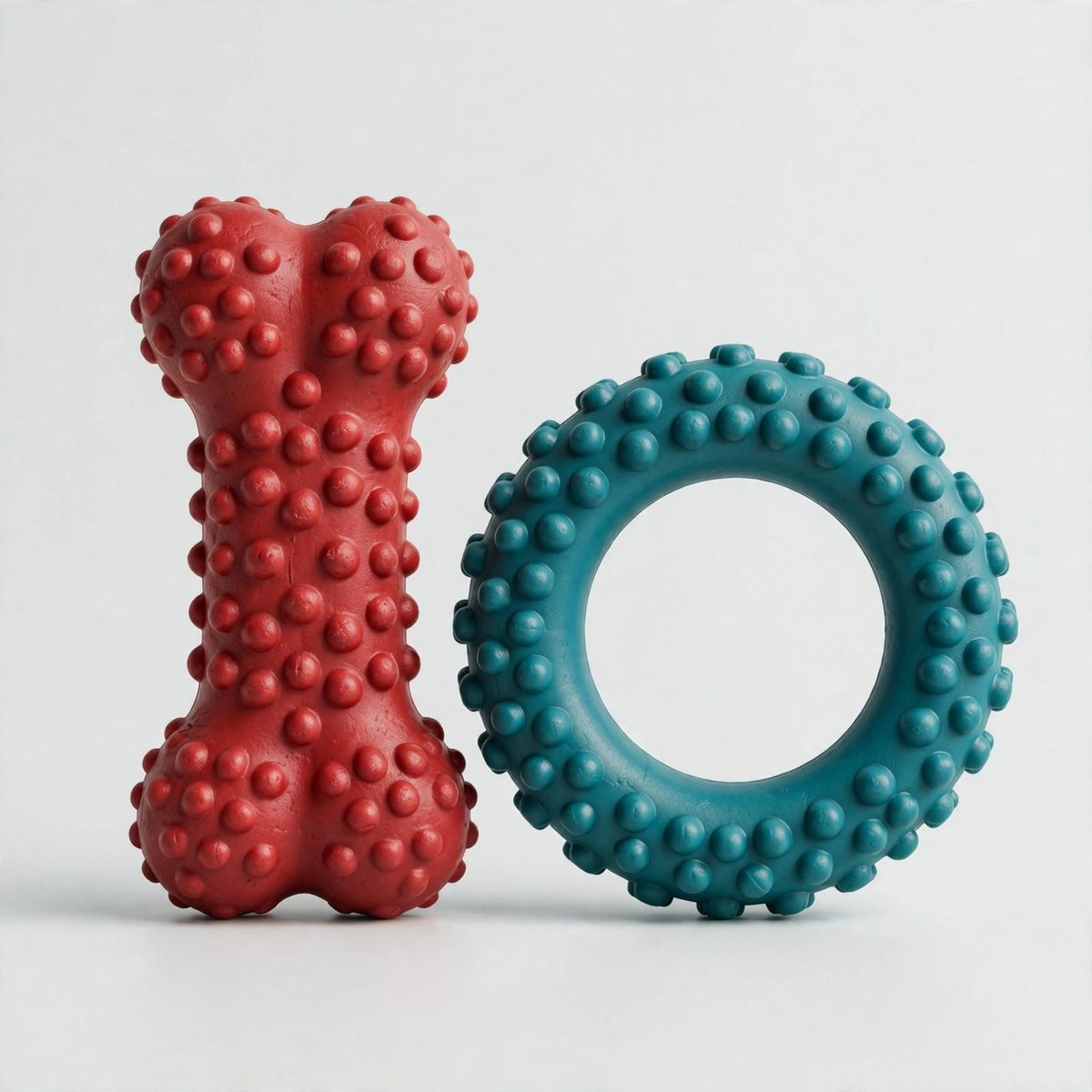
Rubber chew toys are a common starting point because they come in many shapes, from bones and dumbbells to rings and ridged bars. A textured surface gives a dog something to grip with teeth and feet, while a rounded shape is easy to pick up and carry. For example, the BouncePup Rubber Chew Bone, Medium uses a knobby surface and rounded ends that suit steady gnawing sessions. Rubber toys also rinse clean with soap and water, which helps when a toy has been carried outdoors or left near a food bowl.
Rope toys serve a different purpose. A knotted rope gives a dog fibers to mouth and pull, and the same toy can move from solo chewing to a gentle tug game with you. Rope also shows wear clearly: fraying, thinning, and loose strands are easy to spot during a quick check. Keep rope toys for supervised sessions and retire any rope that has thinned or started to shed long strands.
Flavored chew sticks add scent and taste interest for dogs that ignore plain toys. The WiggleWhisk Puppy Teething Chew Ring is one option for small mouths, with soft ridges shaped for teething puppies. Flavored options work well as a short, focused session toy rather than an all-day toy, since the novelty fades if the toy is always on the floor.
Getting the Size Right
Size is a safety question first and a comfort question second. A chew toy should be too large to fit entirely inside your dog's mouth, with enough length or width for feet to hold it steady. A toy that is too small can become a choking risk, while a toy that is too large can be frustrating to grip and may get ignored. If you are between sizes, choose the larger option and watch whether your dog can hold it without strain.
Weight matters as well. A heavier dumbbell shape stays put while a dog gnaws, while a lighter ring is easier to carry and toss. Think about where play happens: a heavier toy suits a living-room chew session, while a lighter toy is easier to bring to the yard or a friend's house. If your dog drops toys often, try a shape with a grip groove or a ring opening that is easy to pick up again.
Build a Small Rotation
One toy rarely covers every mood. A practical rotation has three roles: a daily chew for focused gnawing, a tug or rope toy for interactive play, and a comfort or carry toy for quiet time. Rotate two or three toys every few days so each one feels fresh, and wash toys during the swap. Keep a simple check routine: look at seams, squeeze rubber for cracks, and tug knots gently before each session.
Store chew toys in a basket or bin between sessions rather than leaving all of them on the floor. Putting toys away keeps play structured, slows wear, and helps you notice which toys your dog reaches for first. If a toy sits untouched for a week, try offering it in a different spot or pairing it with a short training session so your dog connects it with attention and praise.
Cleaning and When to Replace
Clean rubber chew toys with warm water and mild soap, rinse well, and let them air-dry fully before the next use. Rope toys can be rinsed and dried in the same way, though thick knots take longer to dry, so plan ahead. Flavored sticks should be stored dry and checked for soft spots or crumbling before each session. A quick clean after outdoor play keeps dirt and grit from wearing down the toy surface.
Replace a chew toy when you see cracks, sharp edges, loose pieces, split seams, or wear that makes the toy small enough to fit in your dog's mouth. If you are unsure, retire the toy. A replacement costs far less than a vet visit, and a fresh toy often renews interest in chew time. Keep a spare on hand so a retirement does not leave your dog without a chew option.