Cats play in short, focused bursts: stalk, chase, pounce, and then rest. The right toy matches that rhythm, giving a cat something to track, catch, and wrestle without long sessions that lead to boredom. This guide covers wand toys, kicker toys, ball tracks, and puzzle feeders so you can build a small kit that keeps indoor cats active and engaged.
Wand Toys: The Core of Cat Play
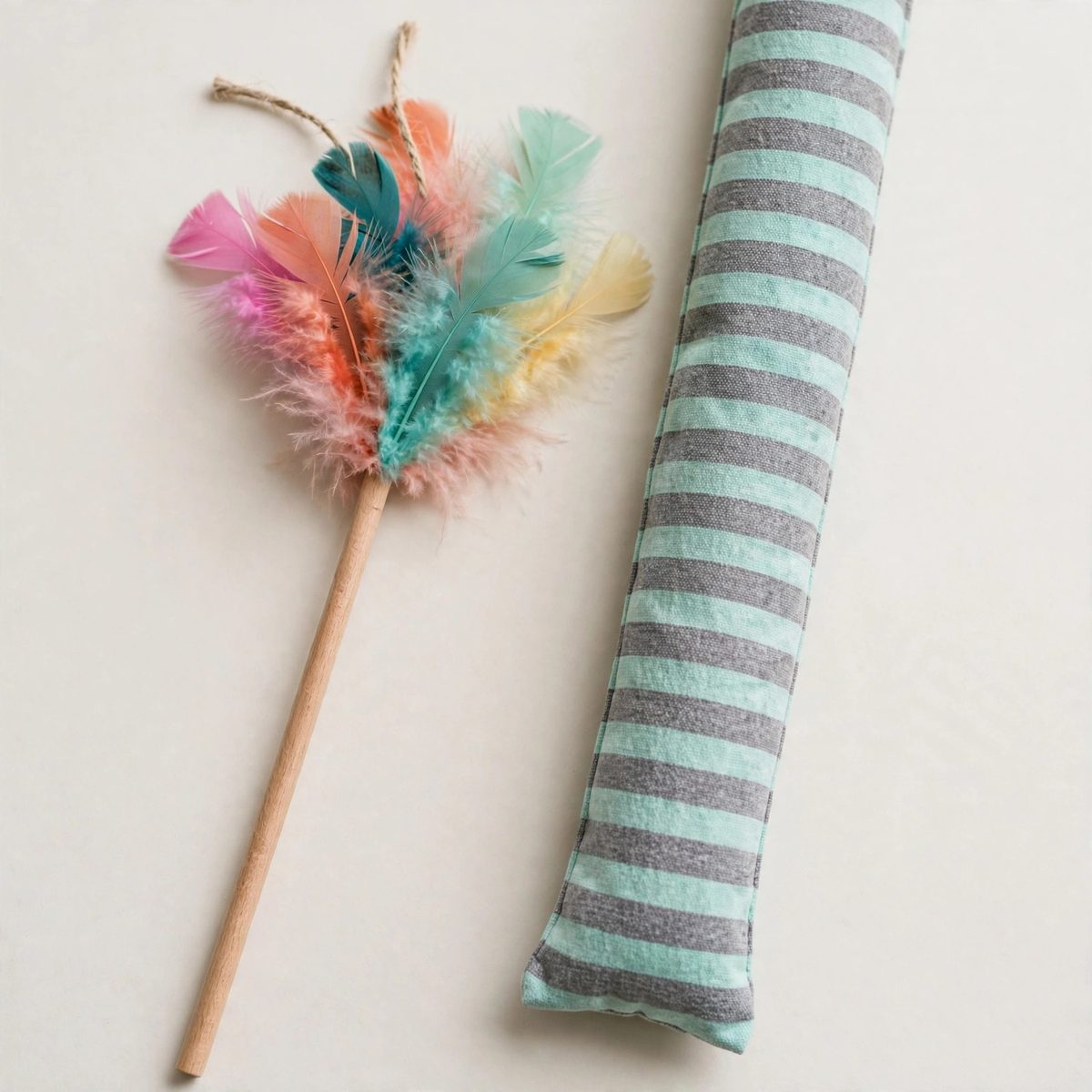
A wand toy lets you mimic the movement of prey without putting your hands near claws and teeth. Move the lure in short dashes, pauses, and changes of direction, and let your cat stalk before the chase. The WiggleWhisk Feather Wand Cat Toy uses a slim handle, a string, and a cluster of feathers that flutter when you flick the wand. Keep sessions to five or ten minutes, and end with a catch so your cat finishes with a reward.
Vary the path: drag the lure along the floor, flick it behind a chair leg, or lift it slightly so your cat follows with eyes and body. Avoid dangling the lure directly over your cat's head for long stretches, since that can lead to jumping that strains joints. Store wand toys out of reach between sessions so string and feathers are not chewed unsupervised.
Kicker Toys: Wrestling and Bunny Kicks
Kicker toys are long, soft shapes a cat can grab, hug, and kick with back feet. They suit cats that enjoy wrestling after a chase, and they give claws and teeth a safe target during energetic play. The ChaseTail Catnip Kicker Toy uses a long striped body with stitched seams and a catnip pouch inside, which adds scent interest for cats that respond to catnip.
Offer a kicker toy after a wand session, when your cat is already in play mode. Place it on the floor near your cat and let your cat grab it rather than pushing it toward your cat's face. If your cat ignores the kicker, try a different texture or a toy with a different fill. Some cats prefer a firm kicker they can hold, while others prefer a softer shape they can drag around.
Ball Tracks and Solo Play
Ball tracks give cats something to bat and chase when you are not holding a wand. A ball inside a track rolls in a circle, which keeps it visible and reachable without rolling under furniture. Tracks suit cats that play alone during the day, and they are useful in apartments where space is limited. Place the track on a flat surface where your cat can circle it without knocking it over.
Rotate solo toys so they do not blend into the background. Put a track out for a few days, then swap it for a crinkle toy or a small ball, then bring the track back. That rotation keeps each toy feeling fresh. Check tracks for loose balls or cracked rings during rotation, and retire any piece that no longer sits firmly in place.
Puzzle Feeders for Cats
Puzzle feeders turn part of a meal into a search game. Raised ridges and small wells slow down fast eaters and give a cat a reason to use feet and nose. Start with a simple feeder and a few visible treats, then add more wells or smaller portions as your cat learns. Use part of a regular meal in the feeder rather than adding extra food on top, so daily portions stay steady.
Place the feeder in a quiet spot where your cat already eats, and keep early sessions short. If your cat feet at the feeder and walks away, try an easier setup with fewer obstacles. If your cat solves the feeder quickly, try a feeder with deeper wells or a different ridge pattern. Puzzle feeding works well as a regular habit, not a one-time novelty.
Building a Cat Play Routine
A practical cat kit has four roles: a wand for interactive play, a kicker for wrestling, a track or ball for solo play, and a puzzle feeder for mealtime enrichment. Keep sessions short, watch for signs that play is ending, and let your cat rest after a pounce sequence. Tail flicks, flattened ears, or a sudden loss of interest are signals to stop and give your cat space.
Clean toys regularly: wipe hard surfaces, shake out crumbs from feeders, and check wand strings for fraying. Retire any toy with loose feathers, torn fabric, or a frayed string. With a small rotation and a few minutes of wand play each day, most indoor cats show steadier energy and more interest in their surroundings.
Storage and Quick Checks
Keep cat toys in a small basket near the play area so rotation stays easy. Before each session, check wand strings for fraying, kicker seams for loose stitching, and feeder wells for trapped food. Retire any toy with a frayed string, torn fabric, or cracked plastic. A tidy basket and a thirty-second check keep every session safe and make it simple to swap toys every few days.