Plush toys are the comfort toys of the dog world: soft shapes to carry, cuddle, and squeak during gentle play. They suit dogs that like to hold a toy in their mouth, bring it to their bed, or settle with it after a walk. This guide explains squeakers, stuffing, seams, and cleaning so you can choose plush toys that fit your dog's play style and last through regular use.
What Plush Toys Are For
Plush toys suit carrying, cuddling, and light interactive play. A dog that carries a toy from room to room, rests a chin on it, or squeaks it gently during a calm game is a natural plush-toy fan. Dogs that chew hard, pull at seams, or try to tear fabric apart will wear plush toys out quickly, so plush is better kept as a supervised comfort toy for those dogs rather than a long chew session toy.
Think about when plush toys fit your day. They suit quiet evenings, crate rest, travel, and gentle indoor games. They are less suited to yard wrestling, tug sessions, or unsupervised all-day chewing. If your dog has both gentle and rough moods, keep plush toys for the calm moments and switch to rubber or rope toys when energy rises.
Squeakers and Sound
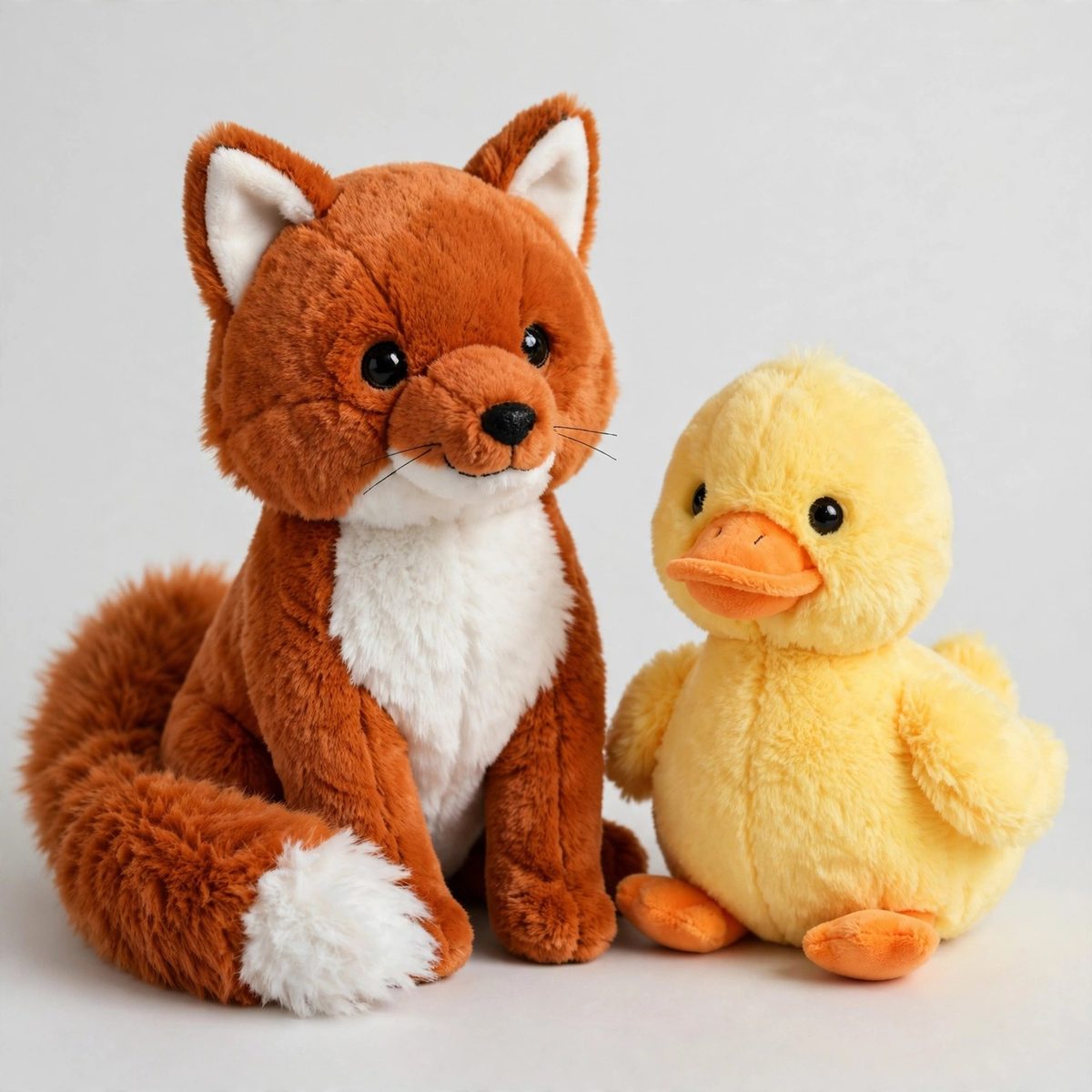
A squeaker turns a soft toy into an interactive game. One squeak can hold a dog's attention, while repeated squeaking can turn a calm dog into a focused player. The WiggleWhisk Squeaky Plush Fox pairs a soft body with a built-in squeaker that responds to gentle mouth pressure. If your dog is sound-sensitive, test squeakers in a shop or at home with one gentle squeeze before a full play session.
Some dogs fixate on the squeaker itself and try to chew through fabric to reach it. Watch for focused chewing in one spot, nosing at the toy, or attempts to pull the squeaker out. If you see those signs, take the toy away and offer a rubber or rope toy instead. Squeaker toys are meant for supervised play, and any toy with an exposed squeaker should be retired right away.
Stuffing, No-Stuffing, and Crinkle
Stuffed plush toys feel soft and cuddly, with a full body that is easy for a dog to hold and carry. The fill gives the toy shape and weight, which many dogs enjoy during rest. Crinkle toys add a rustling texture inside the fabric that responds to mouthing and nosing, giving a dog sound feedback without a squeaker. A mix of stuffed and crinkle toys keeps the basket interesting.
No-stuffing plush toys use flat fabric layers instead of fill, which means less mess if a seam opens. The WiggleWhisk No-Stuffing Plush Squirrel uses flat construction with crinkle ears and a squeaker, so it suits dogs that like to shake and carry toys. Flat toys are also easier to wash and dry than thick stuffed shapes. If your dog has opened stuffed toys before, a no-stuffing option is a sensible next step.
Seams, Eyes, and Construction
Check seams before you buy and before each play session. Look for even stitching, reinforced joins at ears and tails, and fabric that does not pull apart when you tug gently. Embroidered eyes and stitched details are less likely to loosen than glued or button parts, so they are a better choice for dogs that mouth toys. Turn the toy over and check the belly, tail base, and ear joins, where stress concentrates.
Size matters for plush toys too. A plush toy should be large enough that your dog cannot fit it entirely in the mouth, with enough body to carry without swallowing. A toy that is too small can be mouthed aggressively, while a toy that is too large may be dragged rather than carried. If you are between sizes, choose the larger option and watch how your dog holds it.
Cleaning and Rotation
Clean plush toys regularly, especially toys that travel outdoors or live in a bed. Many plush toys can be spot-cleaned with mild soap and water, then air-dried fully before the next use. Flat toys dry faster than thick stuffed toys, so plan drying time accordingly. Check squeakers and seams after washing, since wet fabric can hide small tears that become visible once the toy dries.
Rotate two or three plush toys so each one gets rest and washing time. A simple pattern works well: one plush toy out for play, one clean toy in reserve, and one drying or waiting its turn. Retire any plush toy with split seams, exposed fill, a loose squeaker, or fabric that has thinned enough to tear easily. A fresh plush toy often renews interest in calm play.
Choosing Between Squeaker, Crinkle, and Silent Toys
If your dog loves sound, keep one squeaker toy and one crinkle toy in rotation so each sound stays novel. If your household prefers quiet evenings, choose silent plush shapes or a soft toy with a muted squeak that only sounds under firm pressure. Watch how your dog responds: eager carrying suggests the sound level fits, while dropping the toy or moving away suggests a quieter option would suit the moment. Matching sound to mood keeps plush play calm and enjoyable for everyone in the room.