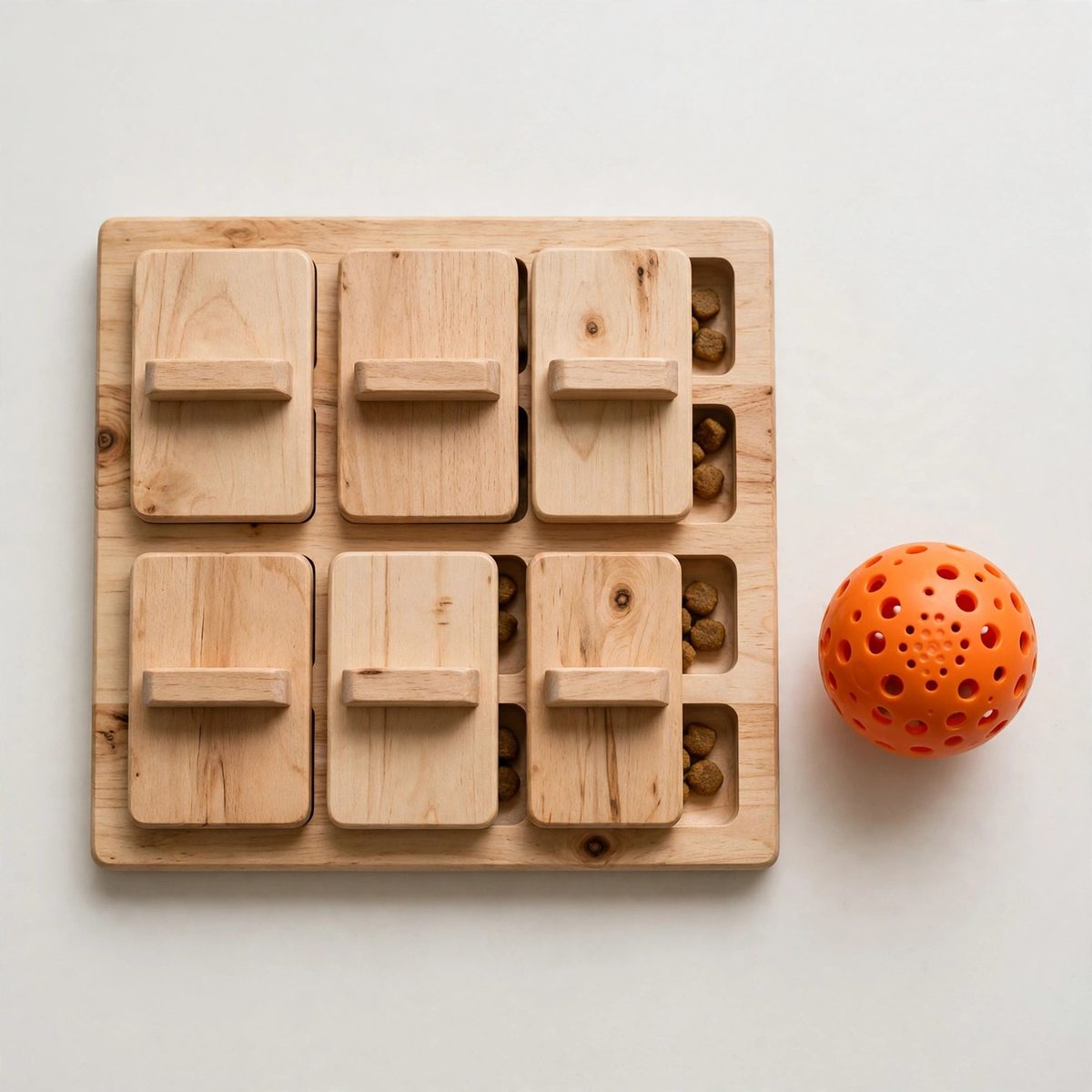
Puzzle toys give dogs a job to do: find a treat, move a cover, roll a ball, or nose through fabric to uncover a reward. That mental work can tire a dog out in ways a quick walk sometimes does not, and it is useful on rainy days, in apartments, or during quiet evening hours. This guide explains puzzle types, difficulty levels, and treat choices so you can pick puzzles your dog can solve without frustration.
How Puzzle Toys Work
Most puzzle toys ask a dog to use feet, nose, or both to reach food. Sliding puzzles hide treats under covers that move sideways. Flip-lid puzzles ask a dog to lift or nudge a lid. Rolling dispensers release treats as the toy moves. Snuffle mats hide kibble among fabric folds so a dog must sniff and nudge to find each piece. Each style teaches a different skill, so a dog that masters one style quickly may still need time on another.
Start with the simplest version of a style before adding steps. If your dog has never used a puzzle, use a few treats in open wells and let your dog watch you place them. Once your dog understands that the toy holds food, add covers, lids, or more hiding spots. Short sessions of five to ten minutes are enough at first, and ending while your dog is still engaged keeps puzzles feeling rewarding.
Sliding Boards and Flip Lids
Sliding puzzle boards are a clear first step because the movement is easy to see. A dog can nudge a cover with a nose or feet and watch a treat appear. The ChaseTail Sliding Puzzle Treat Board uses sliding covers over treat wells, which suits dogs learning how puzzles work. Keep early sessions easy by leaving some wells uncovered, then cover more wells as your dog learns the sliding motion.
Flip-lid feeders add a lifting motion that suits dogs who already feet at objects. Lids that are too stiff can frustrate a small dog, while lids that are too loose may open with a single bump. Watch how your dog approaches the toy: nose nudges suggest sliding puzzles will feel natural, while nosing suggests flip lids or spinning compartments may be a better fit. Offer the puzzle on a non-slip surface so it does not slide away mid-solve.
Rolling Dispensers and Snuffle Mats
Rolling treat dispensers turn mealtime into movement. A dog pushes the ball, the ball rolls, and a treat drops out. Adjustable openings let you control how quickly treats fall, so you can start with a wide opening and narrow it as your dog learns. Rolling toys work well in hallways and open floor space where the ball can move without getting stuck under furniture.
Snuffle mats slow down fast eaters and give sniffing dogs a job that matches their instincts. The WiggleWhisk Snuffle Mat Feeding Toy hides kibble among layered fleece strips, so a dog must search fold by fold. Use part of a regular meal in the mat rather than adding extra treats, and supervise the first few uses so your dog learns to sniff rather than chew the fabric. Shake out crumbs and let the mat dry fully between uses.
Choosing Difficulty
Difficulty has three parts: how many steps a dog must complete, how hidden the treats are, and how precise the movement must be. A beginner puzzle has one step and visible treats. An intermediate puzzle has two steps, such as slide then lift, or treats hidden under two layers. An advanced puzzle mixes motions or asks a dog to work through compartments in sequence. Move up one level at a time, and drop back down if your dog barks, feet hard, or walks away.
Every dog has a different pace. A food-motivated dog may solve puzzles quickly but still benefit from slower feeders that stretch mealtime. A cautious dog may need several short sessions before trying a new motion. A senior dog may prefer puzzles that sit flat and do not require chasing. Match difficulty to the dog in front of you, not to a label on the box.
Treat Choices and Portions
Use small treats that fit the wells and openings of your puzzle. Large treats can jam sliding covers or block dispenser holes, while crumbs can fall through gaps and frustrate a dog. Soft treats work well for quick puzzles, while kibble from a regular meal works well for longer sessions. Keep portions modest: puzzle treats should come out of the daily food amount rather than adding a full extra meal on top.
Rotate treat types so puzzles stay interesting. One day, use kibble. Another day, use a few small training treats. On a third day, mix kibble with a single high-value treat hidden in the hardest spot. That mix keeps the search rewarding without overfeeding. If your dog has dietary limits, check with your veterinarian about suitable treat options before introducing new foods.
Cleaning and Care
Empty every puzzle after use and wipe or wash the surface before storing it. Food residue left in wells can turn stale and make the next session less appealing. Plastic and wooden boards can be wiped with a damp cloth and mild soap, then dried fully. Fabric mats need a shake-out and a full air-dry. Check hinges, sliders, and lids during cleaning, and set aside any puzzle with a cracked compartment or a loose part.