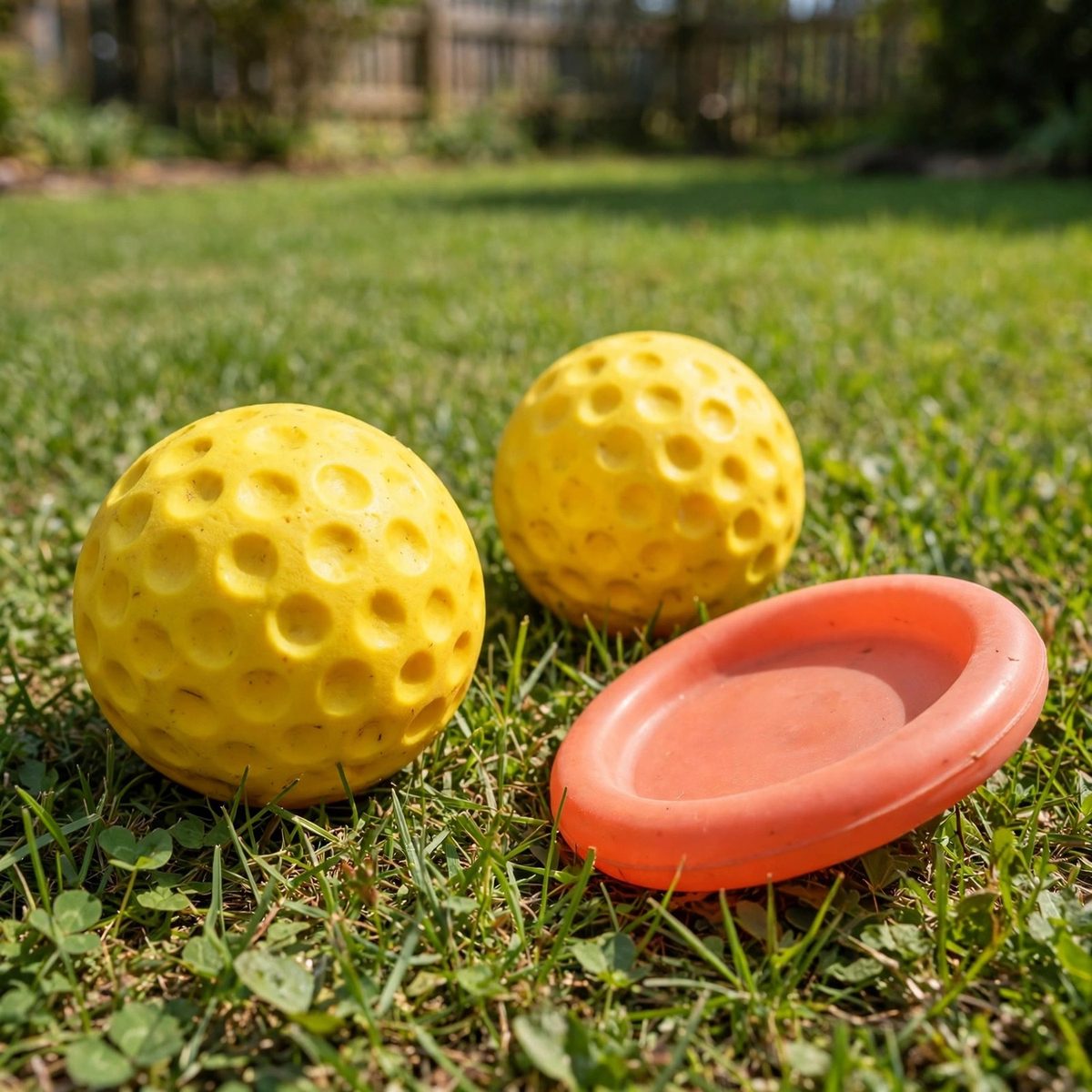
Fetch is a simple game with many variations: a short hallway toss, a long yard throw, a water retrieve, or a disc that floats and curves. The right fetch toy depends on your dog's size, mouth shape, energy level, and where you play. This guide covers balls, discs, launchers, and water toys so you can build a fetch kit that fits your routine.
Balls: Bounce, Grip, and Visibility
Fetch balls vary in bounce, texture, and visibility. A high-bounce ball suits dogs that love to chase, while a lower-bounce ball is easier to control in a small yard. Textured rubber gives teeth and feet something to grip, which helps dogs that drop smooth balls. Bright colors are easier for you to spot in grass, and glow options help during evening play. The WiggleWhisk Bouncy Fetch Ball, 2 Pack gives you a spare for when one ball rolls under a fence or into a bush.
Size matters for fetch balls more than for most toys. A ball should be large enough that your dog cannot fit it fully in the mouth, with room to carry it without jaw strain. If your dog drops balls often, try a slightly larger size or a textured surface. If your dog struggles to pick a ball up, try a smaller size or a ball with a raised pattern that is easier to grip. Keep two balls in rotation so one can dry or be cleaned while the other is in use.
Discs: Flight and Catching Style
Flying discs ask a dog to track a moving object, time a jump, and catch on the move. Flexible discs are often easier for beginners because they are softer on teeth and more forgiving on a missed catch. The ChaseTail Flexible Flying Disc uses a soft rim and a center grip that makes throws easier to control. Start with short, flat throws at your dog's height rather than high arcs, and reward any attempt to chase or nose the disc.
Keep early disc sessions short and low. Throw across a flat, open area without holes, fences, or traffic nearby. End the session while your dog is still eager, and put the disc away between games so it stays linked to focused play. If your dog prefers to chase rather than catch, that is still useful exercise: let your dog run after the disc, pick it up, and bring it back at their own pace.
Launchers: Distance Without Strain
A ball launcher extends your throw without asking your shoulder to do all the work. That helps when your dog needs longer runs or when you want to keep throws consistent. Start on a flat field with plenty of space, and practice the throwing motion without your dog nearby until you can aim reliably. Introduce the launcher gradually: let your dog sniff it, throw a few short tosses, and increase distance only when your dog is comfortable.
Use a launcher with a clear throwing lane and a safe retrieval path. Avoid throwing toward roads, fences, water, or other dogs. Keep sessions to a few throws at first, then build up as your dog's fitness and focus allow. Carry water for both of you, and take breaks in shade on warm days. A launcher is a tool for structured play, not a way to keep a dog running until exhausted.
Water Fetch and Night Play
Water fetch adds a new surface and a new challenge. Floating toys stay visible on the surface, and a rope loop or handle makes them easier to grab from the water. Start in shallow water where your dog can stand, then move deeper only if your dog swims confidently. Rinse water toys after use and let them dry fully before storage. Never throw a toy into fast-moving water or water with hidden obstacles.
Night play needs visibility for both of you. Glow balls and light-colored toys are easier to track in low light, and a well-lit yard helps your dog judge distance. Keep night sessions short, use familiar ground, and avoid throws near steps, planters, or garden edges. If your dog seems unsure in the dark, switch to a gentle roll on the ground rather than a long throw through the air.
Building a Fetch Routine
A useful fetch kit has three pieces: a ball for daily throws, a disc or launcher for longer sessions, and a water or glow option for variety. Rotate them so no single toy wears out quickly, and check each toy for cracks, tears, or soft spots before play. Teach a simple return habit: reward your dog for bringing the toy back near you, and avoid chasing your dog to get the toy, which can turn fetch into keep-away.
Watch for signs that a session should end: heavy panting, slowing down, lying down, or losing interest in the toy. End on a calm note with a short walk or a drink of water. Fetch should leave your dog pleasantly tired, not worn out. With the right mix of toys and short, structured sessions, fetch stays a game your dog looks forward to.