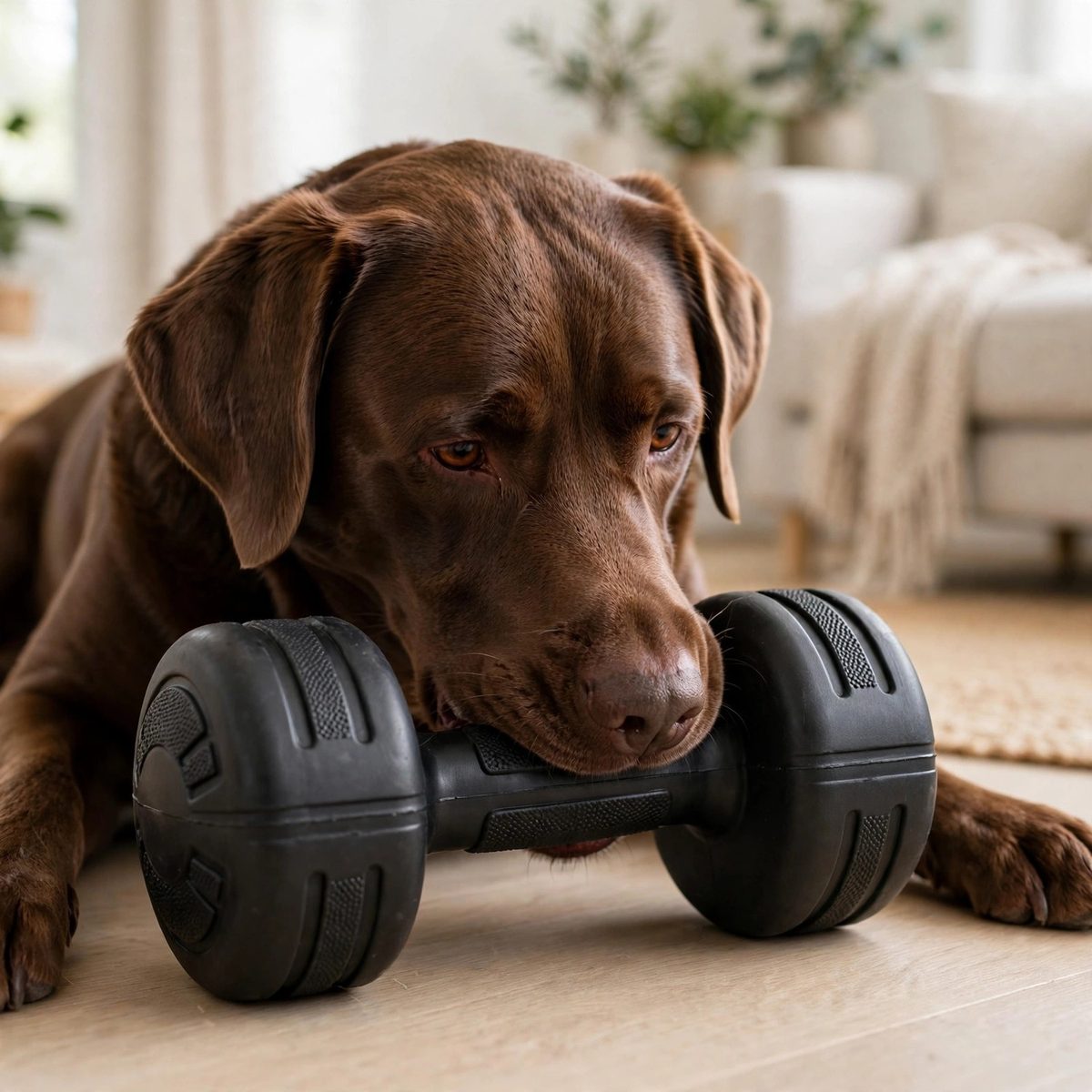
Every dog chews differently. One dog carries a toy gently from room to room and settles with it like a pillow. Another dog plants both feet on a toy and works one edge until the material gives way. Both dogs are playing normally, but they need very different toys. This article explains how to read your dog's chew style, match toys to that style, and build a rotation that keeps play interesting without a constant stream of worn-out toys.
Watch How Your Dog Actually Chews
Before you buy another toy, spend a few minutes watching a chew session with a toy you already own. Notice where your dog holds the toy, how hard your dog bites down, and how long the session lasts. Gentle mouths tend to mouth, lick, and carry toys, pausing often to look around. Moderate chewers gnaw steadily, switch grip positions, and chew for ten to twenty minutes before resting. Determined chewers bite down hard, focus on one spot, and try to tear pieces away. Those patterns matter more than breed, age, or size alone.
Also notice what your dog does when a toy resists. A gentle chewer may drop a hard toy and walk away, while a determined chewer may bite harder and keep going. A puppy may mouth everything in sight and then lose interest when a toy does not give feedback. A senior dog may chew slowly and prefer a toy that is easy to hold. Write down a few notes after two or three sessions: which toys your dog picks first, which toys get ignored, and which toys show wear fastest. That short log becomes a useful shopping guide.
Gentle Mouths: Soft, Textured, and Easy to Carry
Gentle chewers often enjoy toys they can hold, carry, and mouth without effort. Soft ridged rubber, light rope, and plush shapes suit this style because they give feedback without demanding hard biting. A ring shape is easy to pick up, a ridged bar gives teeth something to trace, and a plush shape gives a dog something to cuddle after play. For gentle mouths, variety matters more than toughness: two or three different textures keep interest high.
Keep sessions short and calm for gentle chewers. Offer a toy during quiet time, let your dog mouth it at their own pace, and avoid turning every session into a tug game. If your dog carries a toy to a bed or a sunny spot, that is a sign the toy feels like a companion rather than a challenge. Let that habit stand, and rotate the toy every few days so it stays fresh.
Moderate Chewers: Steady Gnawing and Grip
Moderate chewers are the middle group: they gnaw with purpose, hold toys between their feet, and chew for a solid stretch before resting. They need toys with enough substance to hold up to steady use, but they do not need the densest option on the shelf. A medium rubber bone, a knotted rope, or a ridged chew bar usually fits this style well. The key is grip: a toy with grooves, ridges, or a shape that feet can hold will get more use than a smooth toy that slides away.
Moderate chewers benefit from a small rotation that covers different motions. One toy for focused gnawing, one toy for tug or interactive play, and one toy for carrying or cuddling covers most moods. Rotate toys every few days and wash them during the swap. That routine slows wear, keeps toys feeling new, and helps you notice which toys your dog returns to first.
Determined Chewers: Dense Rubber and Supervised Sessions
Determined chewers bite hard, focus on one spot, and can wear down a toy faster than you expect. For this style, choose dense rubber shapes with thick walls and simple forms that spread biting force. The BouncePup Heavy-Chewer Rubber Dumbbell uses grip grooves on a center bar, which gives a determined chewer a place to hold the toy steady. Avoid thin edges, hollow shapes, and toys with small parts that can be bitten off.
Supervision matters most for determined chewers. Stay nearby, keep sessions to a set length, and check the toy before and after each session. Look for cracks, thinning walls, sharp edges, and pieces that have started to loosen. If a toy shows any of those signs, retire it and switch to a fresh one. Determined chewers often do well with two toys in rotation so one can be checked and cleaned while the other is in use.
Flavor can help hold a determined chewer's attention without adding extra food. The ChaseTail Bacon-Flavor Chew Stick, 2 Pack adds scent and taste interest for dogs that ignore plain toys. Use flavored chews as a focused session toy rather than an all-day option, and store them dry between uses. If your dog chews flavored sticks aggressively, shorten the session and offer a denser rubber toy for the rest of the chew time.
Puppies: Teething, Mouthing, and Learning Pressure
Puppies chew to explore, to soothe sore gums, and to learn how much pressure their jaws can apply. They need softer toys with ridges and shapes sized for small mouths, plus plenty of guidance about what is okay to chew. Offer a teething ring or a soft ridged toy when a puppy mouths furniture, and praise the puppy for choosing the toy. That redirection teaches a habit that lasts into adulthood.
Keep puppy sessions short and frequent rather than long and intense. A few minutes of chewing, followed by a break, a drink, and a nap, suits a puppy's rhythm better than a single long session. Check puppy toys often, since puppy teeth are sharp and can mark soft rubber quickly. Retire any toy that has developed thin spots or loose pieces, and keep a spare on hand so a retirement does not leave a teething puppy without an option.
Size, Shape, and Safety Checks
Size is a safety question first. A chew toy should be too large to fit entirely inside your dog's mouth, with enough length or width for feet to hold it steady. A toy that is too small can become a choking risk, while a toy that is too large can be frustrating to grip. If you are between sizes, choose the larger option and watch whether your dog can hold it without strain. Weight matters too: a heavier toy stays put during gnawing, while a lighter toy is easier to carry.
Build a quick check into every session. Before play, squeeze rubber for cracks, tug knots gently, and look along seams. After play, check the same spots again and put the toy away. Storing toys between sessions keeps play structured and slows wear. If a toy has been chewed down enough to fit in your dog's mouth, retire it, even if it still looks usable at a glance.
Building a Rotation That Lasts
A lasting rotation has three roles: a daily chew for focused gnawing, an interactive toy for games with you, and a comfort toy for quiet time. Rotate two or three toys every few days, wash them during the swap, and note which toys your dog chooses first. If a toy sits untouched for a week, try offering it in a different room or pairing it with a short training session. If a toy wears out quickly, move one step denser next time and shorten sessions.
Chew style can change over time. Puppies grow into stronger chewers, adult dogs settle into steady habits, and senior dogs may soften their bite. Revisit your dog's chew style every few months and adjust the rotation to match. The goal is not to find one toy that lasts forever, but to build a small set of toys that fits the dog you have today, with supervision and regular checks keeping every session comfortable.