Indoor dogs can get plenty of love, food, and rest while still missing one thing: a job to do. Without mental work, many dogs invent their own jobs, and those jobs often involve barking at windows, chewing furniture, or pacing from room to room. Enrichment fills that gap by giving a dog problems to solve, scents to follow, and rewards to earn. This article explains how to use puzzle toys and mental exercise to keep an indoor dog settled, engaged, and ready to rest.
What Enrichment Means in Practice
Enrichment is any activity that lets a dog use natural skills: sniffing, searching, nosing, carrying, and solving small problems. A walk provides enrichment through scents and sights. A puzzle toy provides it through hidden food and movable parts. A training session provides it through focus and rewards. Strong enrichment plans mix all three, so a dog gets physical exercise, mental work, and social time across the day rather than one long burst of activity.
Think of enrichment as part of the daily schedule, not as an extra task. A puzzle feeder at breakfast, a short training session at midday, and a snuffle mat in the evening can fit into a normal routine without a major time commitment. The goal is steady, predictable mental work that leaves a dog calm between sessions. If your dog seems restless after a puzzle, the puzzle may have been too easy, too short, or offered at the wrong time of day. Adjust one variable at a time until the routine feels settled.
Why Mental Exercise Tires Dogs Out
Mental work uses focus, memory, and decision-making, which can tire a dog as surely as a long run. A dog that solves a puzzle must pay attention, try a motion, remember what worked, and repeat it. That sequence takes effort, especially for a dog that is still learning how puzzles work. Many owners notice that a ten-minute puzzle session leads to a longer nap than a ten-minute walk, because the puzzle asks for sustained concentration rather than steady movement.
That effect is useful for indoor dogs, apartment dogs, and dogs recovering from a period of limited activity. Mental exercise also suits rainy days, hot afternoons, and evenings when a long walk is not practical. Keep expectations realistic: enrichment complements physical exercise, it does not replace it. A dog still needs walks, outdoor time, and social contact, but puzzle work can fill the gaps between those outings.
Starting With Simple Puzzles
Start with a puzzle your dog can solve in a few minutes. A rolling dispenser with a wide opening, a snuffle mat with visible kibble, or a sliding board with some wells uncovered all work well as first puzzles. Let your dog watch you place the treats, then step back and let your dog explore. Resist the urge to help too quickly: a few seconds of confusion is part of learning, and solving the puzzle without help builds confidence.
The BouncePup Rolling Treat Dispenser Ball suits early puzzle work because the motion is simple: push the ball, get a treat. Use a wide opening at first, then narrow it as your dog learns. Roll the ball gently to show how it moves, then let your dog take over. Keep the first session to five minutes, end while your dog is still engaged, and praise calm problem-solving rather than frantic nosing.
Adding Difficulty Gradually
Once your dog solves simple puzzles easily, add one new challenge at a time. Cover more wells on a sliding board, add a second step to a flip-lid feeder, or hide treats deeper in a snuffle mat. The ChaseTail Flip-Lid Puzzle Feeder adds a lifting motion that suits dogs who already feet at objects, giving them a new skill to practice. Watch how your dog responds: steady effort and tail wags suggest the level is right, while barking, hard nosing, or walking away suggests the puzzle is too hard for that session.
Keep a simple progression in mind: one step, then two steps, then mixed motions. A dog that can slide covers can try flip lids. A dog that can flip lids can try a spinning wheel or a puzzle that mixes sliding and lifting. Drop back to an easier puzzle if your dog struggles, and end every session on a success, even if that success is a simpler puzzle than the one you started with.
Snuffle Mats and Scent Work
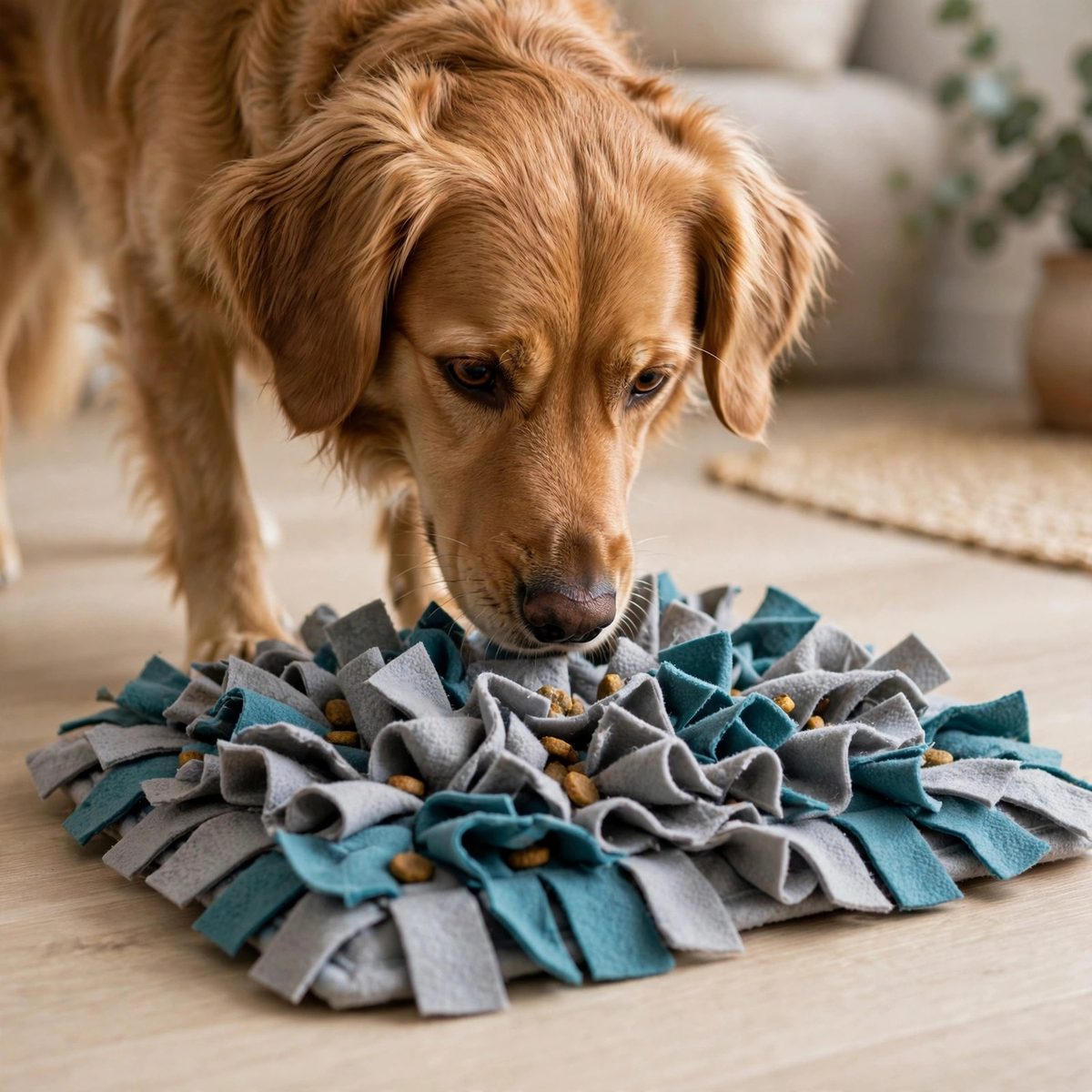
Sniffing is calming work for many dogs. A snuffle mat turns a meal into a scent search, with kibble hidden among fabric folds that a dog must nose through one piece at a time. Use part of a regular meal in the mat rather than adding extra treats, and supervise the first few uses so your dog learns to sniff rather than chew the fabric. Shake out crumbs after use and let the mat dry fully before storing it.
You can extend scent work beyond the mat. Hide a few treats in a room, let your dog search, and praise each find. Scatter kibble across a clean floor or a lawn and let your dog forage. These games use the same sniffing skills as a snuffle mat and give indoor dogs a reason to explore their space. Keep scent games short and positive, and avoid hiding food in spots that encourage chewing furniture or digging at carpets.
Training as Enrichment
Short training sessions are enrichment too. Teaching a new cue, practicing a familiar one, or chaining two cues together asks a dog to focus, remember, and respond. Keep sessions to three to five minutes, use small rewards, and end while your dog is still eager. Training fits well before a puzzle session, since a focused dog often approaches a puzzle with more patience.
Rotate training topics so sessions stay fresh. One day, practice loose-leash walking indoors. Another day, practice a settle cue on a mat. A third day, practice a trick such as a spin or a touch. Each topic uses focus in a different way, and the variety keeps both of you engaged. If your dog loses focus, shorten the session and return to a cue your dog already knows.
Building a Daily Enrichment Plan
A practical daily plan has three parts: a morning puzzle, a midday activity, and an evening wind-down. Morning could be a puzzle feeder with breakfast. Midday could be a short training session or a scent game. Evening could be a snuffle mat or a gentle chew session. Adjust the plan to your dog's energy: high-energy dogs may need two puzzle sessions, while senior dogs may prefer one short puzzle and a calm evening.
Watch for signs that enrichment is working: steadier energy, less demand barking, calmer greetings, and longer rest periods. If your dog still seems restless, add a second puzzle or a longer walk rather than making one puzzle much harder. If your dog seems tired or uninterested, shorten sessions and offer more rest. Enrichment should leave a dog settled, not wired.
Keeping Enrichment Fresh Over Time
Dogs notice repetition quickly, so change one detail each week: a new treat placement, a different puzzle style, a fresh scent game route, or a new cue in training. That small change keeps the work interesting without making every session unfamiliar. Retire puzzles that your dog solves in under a minute every time, and bring them back later after a break. A puzzle that felt easy last month can feel engaging again after a few weeks away. The aim is steady variety: familiar routines with small surprises that invite curiosity and calm focus.