A new puppy arrives with two urgent needs: something safe to chew and someone to play with. The first toys you offer shape how a puppy learns to mouth, fetch, settle, and share space with people. This article covers teething toys, first fetch games, comfort toys, and early play habits so your puppy's first weeks feel calm, structured, and fun.
What Puppies Need From Toys
Puppies explore the world with their mouths. They mouth hands, shoes, furniture, and anything left on the floor, not out of naughtiness but out of curiosity and teething discomfort. Toys give that mouthing a clear target. A puppy with a few well-chosen toys and a consistent routine learns quickly that toys are for chewing and hands are for petting and treats. That lesson takes repetition, patience, and a steady supply of appealing options.
Keep the first toy set small: a teething toy for chewing, a soft toy for carrying and cuddling, and a ball or light fetch toy for short games. Too many toys at once can scatter a puppy's attention, while too few can leave a puppy searching for other things to chew. Rotate toys every few days so each one feels fresh, and put toys away between sessions so play stays structured.
Teething: Soothing Sore Gums
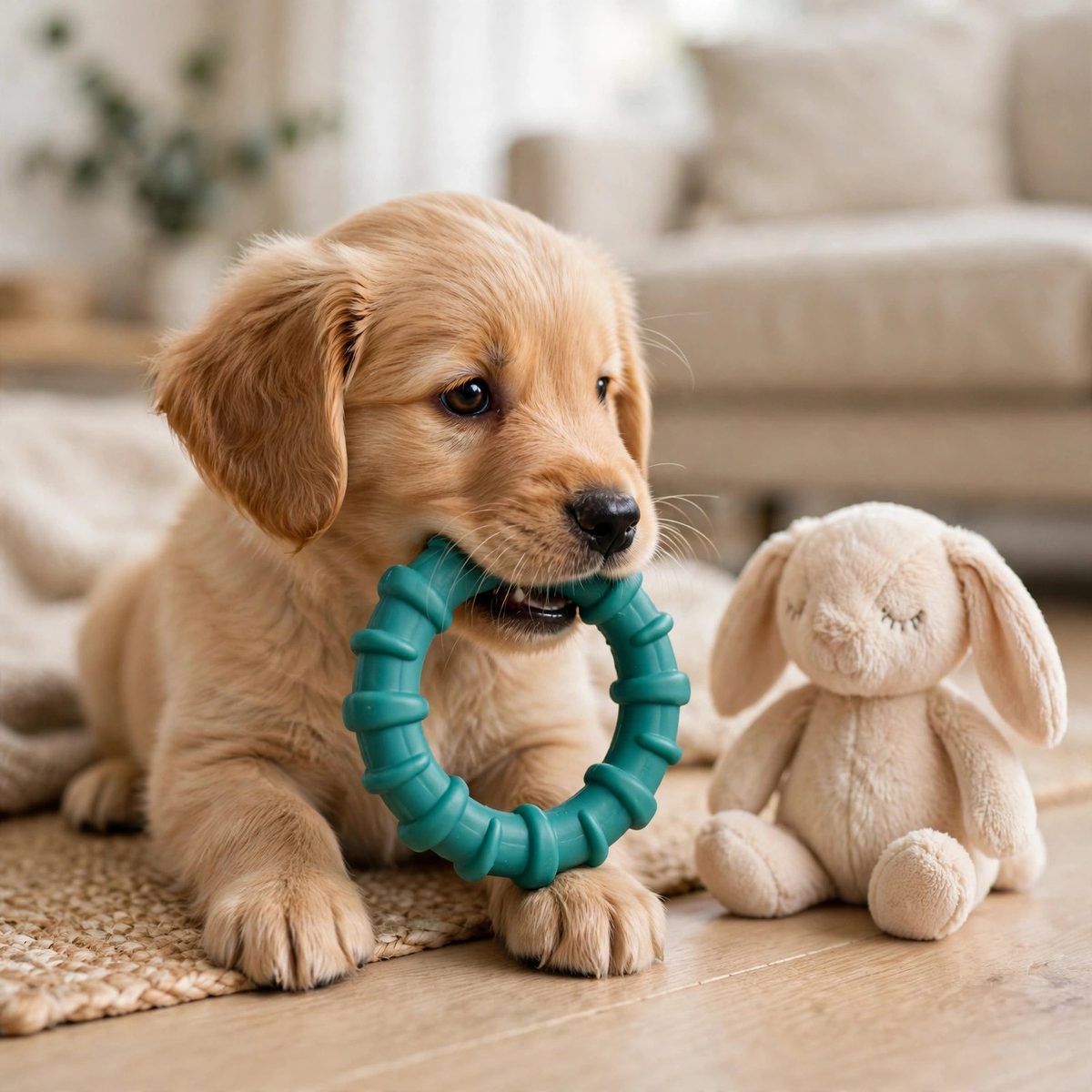
Teething puppies often seek out cool, ridged surfaces to mouth. A soft rubber ring with ridges gives a puppy something to gnaw without demanding hard biting. The WiggleWhisk Puppy Teething Chew Ring uses a ring shape sized for small mouths, with soft ridges a puppy can hold between feet. Offer the ring during calm moments, after meals, and whenever a puppy starts mouthing furniture.
Redirect rather than scold. When a puppy mouths your hand, calmly offer the teething ring and praise the puppy for taking it. When a puppy mouths a shoe, swap the shoe for the ring and move the shoe out of reach. That swap teaches a clear rule: this is for chewing, that is not. Repeat the swap many times a day, since puppies learn through repetition rather than a single correction.
Check teething toys often. Puppy teeth are sharp and can mark soft rubber quickly. Look for thin spots, tears, and pieces that have started to loosen, and retire any toy that shows damage. Keep a spare teething toy on hand so a retirement does not leave a sore-gummed puppy without an option.
First Fetch Games
Fetch with a puppy should be short, gentle, and close. Roll a soft ball along the floor rather than throwing it far, and praise any attempt to chase, nose, or pick it up. A puppy that brings the ball back deserves calm praise and a treat, while a puppy that runs off with the ball is still learning the game. Keep sessions to a few rolls, then end with a calm moment and a drink of water.
Use a ball sized for a puppy's mouth, with a texture that is easy to grip. Avoid high throws, long distances, and games on slippery floors, since puppies are still learning coordination. If a puppy loses interest, stop and try again later rather than pushing for one more throw. Short, positive fetch sessions build a habit that grows into a full game as the puppy matures.
Comfort Toys and Settling Down
Comfort toys help puppies settle. A soft plush toy to carry, cuddle, or rest beside can make a crate, a bed, or a new room feel more familiar. The WiggleWhisk Squeaky Plush Fox pairs a soft body with a squeaker that responds to gentle mouth pressure, which suits calm indoor play. Keep plush toys for supervised cuddle and carry sessions rather than long chew sessions, since puppies can pull seams open with persistent chewing.
Use a comfort toy as part of a settle routine. After a play session, offer the plush toy on the puppy's bed, speak calmly, and let the puppy wind down. That pairing teaches a puppy that the bed is a place to rest with a familiar toy, not just a place to wait for the next game. If a puppy chews the plush toy hard, swap it for a teething ring and save the plush toy for a calmer moment.
Early Tug and Interactive Play
Gentle tug games teach a puppy to play with people without grabbing hands or clothing. Use a light rope or a soft tug toy, keep tugs short and low, and teach a release cue early. A simple pattern works well: tug for a few seconds, pause, offer a treat, and praise the puppy for letting go. That pause teaches a puppy that letting go leads to good things, which makes later tug games easier to manage.
Keep tug pressure light with puppies. Avoid lifting a puppy off the ground, pulling hard, or letting a puppy hang from a toy. End tug sessions while the puppy is still engaged, and put the tug toy away between games. If a puppy starts grabbing hands or clothing during tug, pause the game, offer a chew toy, and try again later with a calmer start.
Household Rules and Supervision
Supervision is the most important part of puppy play. Stay nearby during chew sessions, tug games, and fetch, especially with a new toy. Supervision lets you redirect mouthing, step in if a toy starts to break apart, and praise good choices in the moment. Put toys away between sessions so play stays structured and toys last longer. A puppy that always has access to every toy learns to ignore them, while a puppy with a small rotation stays interested.
Set up the house for success. Keep shoes, cables, and small objects out of reach, and give the puppy a clear play area with a bed, a water bowl, and two or three toys. That setup reduces the number of redirections you need and helps a puppy learn where play happens. When you leave the room, move the puppy to a safe area with a teething toy and a comfort toy rather than leaving the puppy unsupervised with a full basket.
When to Add New Toys
Add new toys gradually as your puppy grows. Start with teething, comfort, and gentle fetch toys, then add a simple puzzle, a rope tug, and a slightly denser chew toy as your puppy's jaw strength and focus develop. Watch how your puppy responds to each new toy: eager chewing suggests the toy fits, while ignoring the toy suggests it may be too hard, too large, or too unfamiliar. Keep notes on which toys your puppy chooses first, and let those preferences guide the next purchase.
Puppyhood passes quickly, and the habits built now last for years. A puppy that learns to chew toys, fetch gently, tug with a release, and settle with a comfort toy grows into an adult dog with clear play skills. With a small set of well-chosen toys, steady supervision, and patient redirection, early play becomes a foundation for a lifetime of calm, rewarding games.
Calm Exits and Alone Time
Early play should also teach a puppy that quiet alone time is normal. After a play session, offer a teething ring on the puppy's bed, step out of sight for a few seconds, and return calmly before the puppy gets upset. Build that pause gradually over days, always pairing alone time with a familiar toy and a settled space. Avoid long separations early on, and keep departures low-key rather than dramatic. A puppy that learns to rest with a toy nearby grows into a dog that can settle while the household gets on with the day.